

TL;DR: California requires a 60-inch enclosure with self-closing, self-latching gates around residential pools, plus at least two of seven approved drowning prevention measures, and material choice shapes how easily the fence passes inspection.
Pool fence compliance in California is one of those topics where everyone has a vague sense of the rules and almost nobody knows the specifics until a building inspector pushes back at the final walkthrough. The Swimming Pool Safety Act sets the statewide baseline: any residential pool 18 inches deep or more, whether brand new or recently remodeled, has to be enclosed by a barrier at least 60 inches tall with self-closing, self-latching gates that open away from the water. Beyond the height, the code spells out exactly how close to the ground the barrier has to sit, how big the vertical gaps can be, and what counts as a foothold a small child could use to climb. Material choice (aluminum, wrought iron, mesh, glass, or composite) doesn't change the rules, but it does shape how easy it is to design a fence that passes inspection on the first try.
The Statewide Baseline: Cal HSC 115920 through 115929
The Swimming Pool Safety Act lives in the California Health and Safety Code, sections 115920 through 115929. Anyone planning a new pool, a major pool remodel, or a new fence around an existing pool should read the actual statute before signing a contract. The official text of Section 115923 spells out the enclosure rules that drive the rest of the compliance conversation.
The core enclosure requirements break down into a short checklist that every Southern California property owner should keep in front of them when sizing up a quote:
- Minimum 60 inches in height, measured from grade on the side of the enclosure that faces away from the pool
- Maximum 2-inch vertical gap from the ground to the bottom of the barrier
- No openings, gaps, or voids that allow a 4-inch sphere to pass through
- No protrusions, cavities, or other features that work as handholds or footholds for a child under five
- Gates that open away from the pool, with self-closing and self-latching hardware
- Gate latches positioned at least 60 inches above the ground (or specific lower configurations that prevent a child from reaching through)
For new and remodeled pools, the law goes further. The pool itself has to include at least two of seven approved drowning prevention features. The enclosure is one. The others include mesh fencing meeting ASTM F2286, approved safety covers, exit alarms on doors leading to the pool, self-closing self-latching doors on the structure, pool surface alarms, and other state-approved devices. A code-compliant perimeter fence covers feature one. The owner still has to pick a second to satisfy the statute.
Vertical Spacing, Horizontal Members, and the Climbability Problem
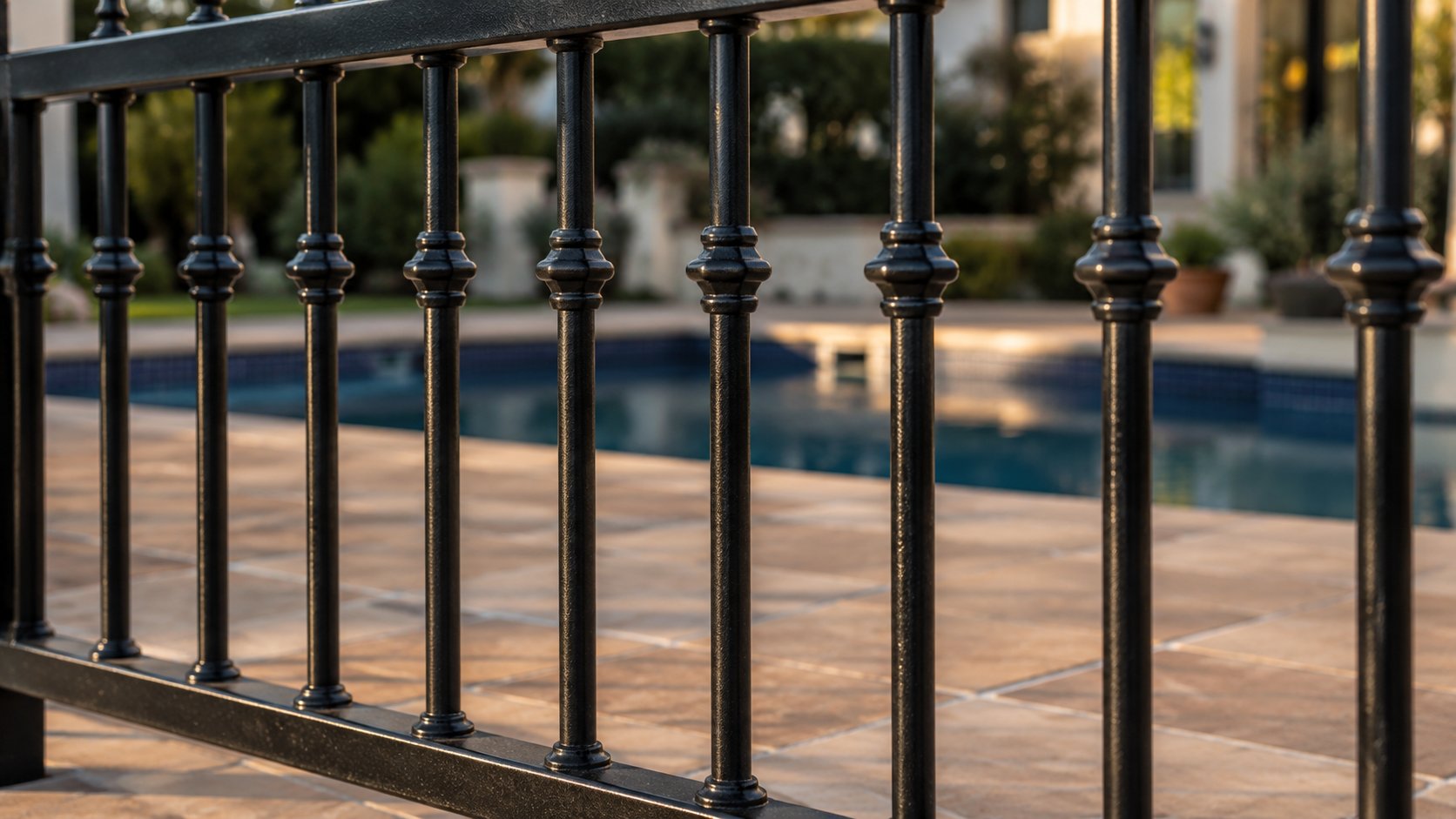
The 4-inch sphere rule sounds simple until a designer tries to apply it to a real fence. Wrought iron pickets typically run on 4-inch centers with 3-inch picket spacing, which keeps the sphere out comfortably. Aluminum pool fence panels usually arrive prefabricated with picket spacing already verified to the sphere rule, which is one of the reasons our aluminum gates and fencing are the most common pool-perimeter material in Southern California. Mesh systems use a fabric weave that obviously blocks the sphere but adds the ASTM F2286 fabric-tension and pole-spacing tests on top of the basic code.
Horizontal members create the bigger compliance trap. Code prohibits horizontal handholds or footholds that a child under five could use to climb. Two practical interpretations apply across most Southern California jurisdictions:
- If horizontal rails are more than 45 inches apart, vertical picket spacing must stay at or under 1.75 inches (the spacing test for a non-climbable design)
- If horizontal rails are less than 45 inches apart, the assembly is considered climbable, and the design needs additional features (like a smooth panel) to make the climb impossible
This is why older two-rail wrought iron fences with widely spaced horizontals often fail inspection at a remodel: they meet the height and sphere rules but fail the climbability test. Modern designs solve it with three-rail layouts and tighter picket spacing, or with mesh and glass panels that have no horizontals at all.
Gate Hardware: Self-Closing, Self-Latching, and the Latch-Height Question
Gate compliance is where most pool fence failures happen at inspection. Three rules govern the gate:
- The gate must swing away from the pool, never toward it
- The gate must close and latch from any open position without manual help (true self-closing hinges, not just spring-loaded ones)
- The latch must sit at least 60 inches above the ground, OR sit lower with a release mechanism shielded so a child can't reach through a 0.5-inch opening within 24 inches of the latch
The 60-inch latch height is the cleanest path. It puts the release out of reach of small children without requiring any special hardware. Lower-mounted latches are technically allowed but require careful design of the shielding around the release, and many local building departments lean on owners and contractors to use the 60-inch standard to avoid the question entirely.
Magnetic latches and key-locking pool gate latches both qualify, as long as the mechanism is genuinely self-latching from any starting position. A handle that the owner has to flip back into position before walking away does not pass code, even if it physically locks once flipped.
Material Choices for a Code-Compliant Pool Fence in Southern California
All five common pool fence materials can pass California code if designed right. The choice usually comes down to climate durability, sight lines, and aesthetic preference rather than the rules themselves.
Aluminum is the workhorse for Southern California pool fences. Powder-coated aluminum doesn't rust in salt air, requires almost no maintenance, comes prefabricated to pool-code spacing, and reads as understated and modern. It's also the lightest option, which keeps installation costs down on long perimeter runs. The trade-off is that aluminum reads as less premium than wrought iron up close.
Wrought iron remains the choice when the property's architecture calls for something more substantial. Forged scrollwork, period-correct finials, and welded picket assemblies all read as custom. The maintenance bump is real (rust touch-up every few years in coastal zip codes), and the design has to account for the climbability rules, but a well-designed wrought iron pool fence anchors a Mediterranean or Spanish Colonial home in a way aluminum can't. The full range of wrought iron fence designs includes pool-rated picket assemblies that ship pre-spaced.
Glass panel fencing has grown in Orange County and along the coast over the last several years. Tempered safety glass is non-climbable by definition, eliminates sight-line conflicts (the pool stays visible from the patio), and reads as distinctly modern. Glass requires more careful structural design (the posts and channels have to handle wind loads on each large pane) and a higher up-front cost, but it solves the climbability problem outright.
Mesh fencing meets ASTM F2286 and offers the lowest material cost of the four. It's also removable, which appeals to families who want a code barrier during early childhood and plan to take it down later. The trade-off is aesthetic: mesh always looks like a safety device, not a permanent architectural feature.
Composite and wood fencing meet code as long as the panel design hits the sphere, climbability, and gap rules. They're less common as pool-perimeter materials because wood absorbs pool chemistry overspray and composite trends modern in a way that competes with glass and aluminum on aesthetics.
Setbacks, Property Lines, and the Permit Conversation
Pool fence compliance lives at the intersection of state code and local jurisdiction. The Swimming Pool Safety Act is the statewide floor, but each city in Orange County, LA County, and San Diego County layers on its own setback requirements and permit process for the fence itself.
In most Southern California cities, a pool perimeter fence under 6 feet in height does not require a separate building permit if it sits inside the property line. The pool permit itself triggers the inspection of the enclosure as part of the final pool inspection. A fence that doubles as the property-line fence usually picks up an additional setback or material restriction depending on zoning. Coastal cities sometimes add view-corridor or coastal commission rules that restrict solid panels along certain side-yard runs.
Our home fencing installations include both the perimeter and the pool-specific designs in one set of drawings, which streamlines the inspection conversation. A separate pool-only fence inside the property is the cleanest path when the property-line fence already exists and doesn't meet pool code.
Common Compliance Failures and How to Avoid Them
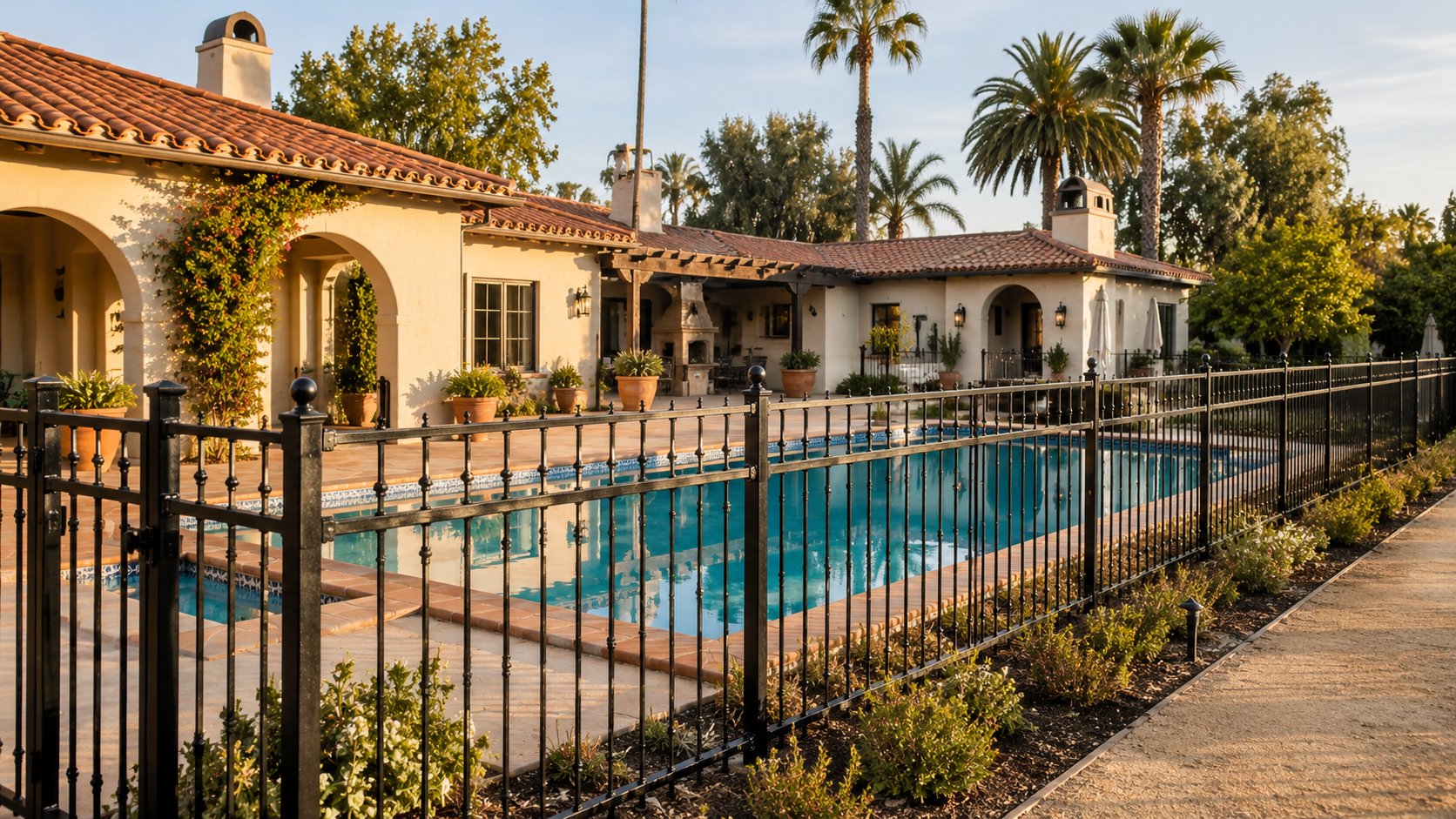
The same handful of issues account for most pool fence inspection failures in Southern California. The grade drop along the back of a sloped lot can pull the effective fence height below 60 inches on the downhill side, even when the uphill side measures fine. Sloped lots need either a stepped fence design (where each section maintains 60 inches on the low side) or a taller overall design that absorbs the slope.
Gate hardware that's technically self-closing but slow to close also fails. Inspectors want to see the gate close and latch on a slow swing from 6 inches open, not just from full open. Hinge tension matters more than the marketing label.
The most common avoidable failure is an existing horizontal rail near the bottom of the fence that the inspector reads as a climbable foothold. A two-rail design with rails at 12 inches and 60 inches looks fine on paper but creates a clear step for a small child. A three-rail design with the middle rail much lower (or higher) breaks the climb pattern.
Working With a Pool Fence Installer in Southern California
The right installer brings three things to the table beyond the materials themselves: experience with the local building department's inspectors and their interpretation of the code, prefabricated panels with verified picket spacing for the chosen material, and the ability to coordinate the fence install with the pool contractor's final inspection so the timeline doesn't slip.
Ask any installer about their last five pool fence inspections in your specific city. The answer tells you whether they know which jurisdictions are strict on horizontal handholds, which ones lean hard on the 60-inch latch height, and which want to see the gate close from a slow start. To talk through your specific pool layout, lot lines, and material preferences, schedule a consultation and we'll walk through what a code-compliant design looks like for your property.
FAQ
What's the minimum height for a pool fence in California?
Sixty inches, measured from grade on the side of the fence facing away from the pool. On sloped lots, the 60-inch minimum has to hold along the lowest point of the fence run, which often means a stepped design.
Do gates have to swing away from the pool?
Yes. The Swimming Pool Safety Act requires gates to swing away from the water and to close and latch automatically from any open position. The latch must sit at least 60 inches above the ground, or use shielded hardware that meets the 0.5-inch and 24-inch reach-through rules.
What's the 4-inch sphere rule?
Code prohibits any gap or opening in the fence large enough to let a 4-inch sphere pass through. The rule applies to vertical picket spacing, horizontal rail gaps, and the space at the bottom of the fence.
Can I use mesh fencing instead of a permanent fence?
Yes. ASTM F2286 mesh fencing is one of the seven state-approved drowning prevention features. It can serve as the primary pool barrier as long as the fabric meets the standard and the posts hold the tension.
Do I need a separate permit for a pool fence?
In most Southern California jurisdictions, a fence under 6 feet inside the property line does not require a separate building permit, but the fence is inspected as part of the pool's final inspection.
