

TL;DR: Most manual driveway gates in SoCal can be automated. You need a residential opener, power to the gate, a backup battery, access control, and often HOA approval.
Residential driveway gate automation means adding a motor, a power source, and a way to open the gate from the car, so nobody has to get out to deal with it. There are really two versions of the job: adding automation to a manual gate you already have, or building a new gate with automation planned in from the beginning. The hardware is the same either way. The budget difference comes down to how much of the existing gate can stay.
This is written for homeowners rather than property managers. It covers whether your current gate is a good candidate, how the gate gets power, what a backup battery actually does when the power goes out, how to get through an HOA review, and what it is like to live with the gate once the installer leaves.
Can Your Current Gate Be Automated?
Before anyone talks about which opener to buy, the question is whether the gate itself can handle being moved by a motor several times a day for the next fifteen years. A manual gate only needs to survive a person pushing it. A motorized gate has to stay square through thousands of cycles.
Practically, that means the gate leaf needs to be rigid, with no sag at the latch side. The hinges need to be heavy-duty and plumb, because an opener fighting a bound hinge will wear itself out. The posts need to be set deep in concrete, since a motor pushing on a gate puts a lot more load on the post than a hand on the latch ever did.
Swing room matters too. A swing gate needs a flat, clear arc to open into. If the driveway slopes up toward the house, an inward swing often will not clear the pavement at all. That is the most common reason a hillside home in Southern California ends up converting to a slide gate, and it is much better to find out during the site visit than after the opener has been ordered.
As for materials, aluminum gates are the easiest to automate because they are light and put little strain on the opener and posts. Older wrought iron gates get automated all the time, but some need new hinges or a reinforcing rail first. Wood is the hardest case. It gets heavier when it is wet and twists with the seasons, and openers do not like either.
Picking an Opener
Residential gate motor and lock systems come in swing and slide versions, and your gate type decides which one you need. After that there are two numbers worth understanding: the weight and length rating, which should be comfortably above your gate rather than right at the limit, and the duty cycle, which is how many opens per hour the motor is designed for. A house with two cars does not need a commercial unit, but buying an opener that is barely rated for the gate is the usual reason they fail early.
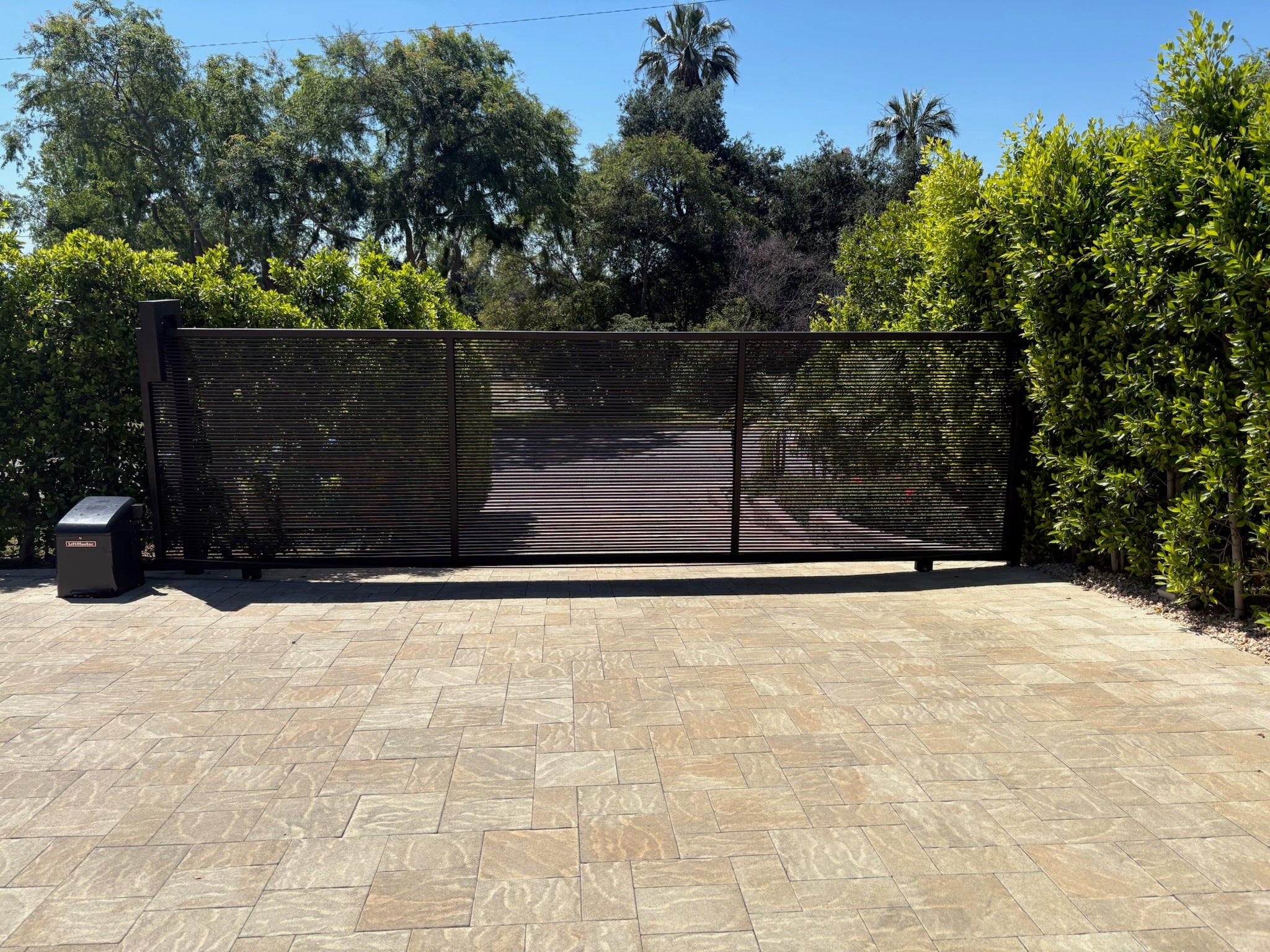
Swing openers are either an arm that mounts on the post and pushes the gate, or an underground unit that sits in a vault below the hinge. The underground version is cleaner looking and costs more. Slide openers sit next to the gate and drive a chain or a gear rack along the bottom rail. For most homes in Orange County and Los Angeles County, a low-voltage swing or slide unit sized to the gate is the right call.
The one thing we will not skip is entrapment protection. Current openers come with photo eyes or edge sensors that reverse the gate if something is in the way. They need to be installed and tested, not left in the box because the gate "seems fine." A gate that can close on a kid or a dog is a liability, not a convenience.
Getting Power to the Gate
Every opener needs electricity, and getting it to the gate is usually the biggest hidden cost of a retrofit. How far the gate is from the house panel, what the driveway is made of, and whether there is already a conduit in the ground all affect the price.
A hardwired 120-volt line in conduit is the most dependable setup. It means trenching from the house or a nearby outlet. If the driveway is concrete or pavers that cannot come up, the trench goes around it or the conduit gets bored underneath. Low-voltage openers help a little, since the transformer can stay at the house and a smaller cable runs to the gate, but you still need the trench.
Solar is the way around the trench on long driveways. A panel and charge controller near the gate keep a battery charged, and the battery runs a low-voltage opener. In Southern California that works most of the year for a typical two-car household.
Where solar struggles is shade from mature trees, heavy traffic, and a run of overcast mornings in late spring. If the installer sizes the panel and battery for how your household actually uses the gate instead of what the kit defaults to, you avoid the gate dying on a Sunday evening.
What the Backup Battery Does
The backup battery is the line item people cut from the quote and then wish they had not. Between public safety power shutoffs during fire weather, planned utility work, and ordinary outages, a hardwired gate will lose power at some point. Without a battery, it stops wherever it is.
With a battery, the gate keeps working for a limited number of opens, usually enough for a day or two of normal use. Most openers can also be set to open and stay open when the power drops, which is what fire departments prefer. Every opener also has a manual release, usually a keyed lever, that disconnects the motor so you can push the gate by hand. Find out where it is before you need it, and keep the key somewhere other than in the car that is stuck on the wrong side of the gate.
Access Control for a Home
A house does not need the access system a business does, but there are more options than most people realize. The basic setup is a remote in each car. A keypad at the entrance lets family, a housekeeper, or a delivery driver use a code instead of a remote, and you can change the code when the landscaper changes.
Phone control has become the standard upgrade. A connected opener, or a small receiver added to an existing one, lets you open the gate from an app, check whether it is open or closed, and give a guest access for a set window. Add a video intercom at the post and you can see and talk to whoever is at the gate from wherever you are. For houses in Newport Beach or Pacific Palisades where deliveries show up all day, that turns out to be the part people use most.
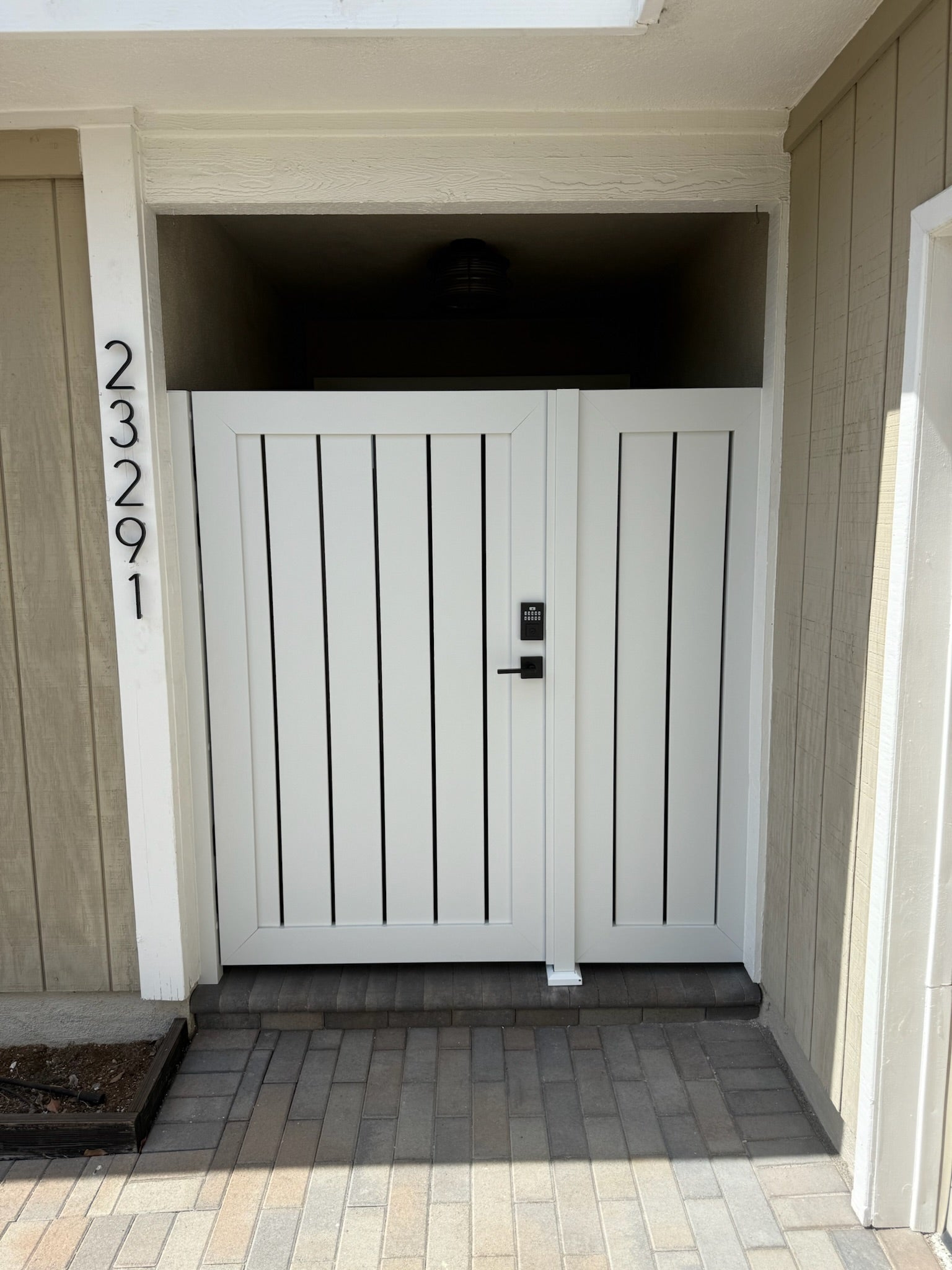
The thing that gets left out is exit sensing. A loop buried in the driveway or a probe alongside it opens the gate automatically for cars leaving, so you are not hunting for a remote on the way out. It is cheap to add during installation and a pain to add afterward.
Dealing With the HOA
A lot of Southern California neighborhoods have a homeowners association, and a driveway gate is the kind of visible exterior change that almost always needs architectural approval. What many owners do not know is that state law puts rules on the association too. Under Civil Code section 4765, an HOA that requires approval for physical changes has to have a fair, reasonable, and reasonably quick procedure with set deadlines, has to decide in good faith rather than arbitrarily, and if it says no, has to put the reasons in writing along with how to ask for reconsideration.
In practice the fastest approvals come from complete submittals: a scaled drawing of the gate, where the opener and any keypad pedestal will sit, the finish color, and a note on where the power will run. The things associations push back on most are gate height, openers visible from the street, and pedestals that crowd the sidewalk. If those three are designed to the association's guidelines before you submit, a two-month back-and-forth often becomes one approval.
Building a New Gate With Automation in Mind
If the existing gate is not a good candidate, or there is no gate yet, planning for automation from the start avoids most of the compromises. The posts get set for the opener's loads. Conduit goes in before the driveway is poured. The gate gets built at a weight the opener is comfortable with, and the keypad and intercom get a proper pedestal in the right spot instead of being bolted wherever there is room.
It also opens up the material choice. Powder-coated aluminum keeps the gate light, so you can go wider or taller without stepping up to a heavier opener, and the aluminum driveway gate options now run from horizontal slat to traditional picket. Iron is still the choice when the house wants scrollwork or the owner wants the weight, and a correctly sized opener handles it fine.
Living With an Automated Gate
An automated gate needs a little upkeep. Hinges and rollers should be greased a couple of times a year, the photo eyes need their lenses wiped, and the battery should be tested and eventually replaced on the manufacturer's schedule. Once a year, check the gate for sag at the latch side. A gate that has dropped half an inch starts dragging, and the opener strains against it.
Most problems give warning. A gate that hesitates, reverses for no reason, or opens slower than it used to is telling you something, and a service call at that point costs far less than a new opener. Keep the installation paperwork, including the opener model and your access codes, somewhere you can find it.
Whether you want to automate an existing gate in Costa Mesa or plan a new one anywhere in Orange County, Los Angeles County, or San Diego County, the easiest first step is to get a quote for your driveway gate and send a few photos of the gate, the posts, and the path back to the house. That is usually enough for us to tell you whether a retrofit makes sense.
Frequently Asked Questions
Can any manual driveway gate be automated?
Most can, but not every one. The gate needs to be rigid and square, the hinges heavy-duty and plumb, and the posts set solidly in concrete to take the opener's load. A sloped driveway can rule out an inward swing, which usually means switching to a slide gate. An installer can sort all of this out in one site visit.
Does a residential gate opener need a dedicated electrical line?
A hardwired opener needs power run to the gate, which usually means trenching conduit from the house. Low-voltage openers use a smaller cable but still need the trench. Solar systems skip the trench by charging a battery at the gate, and they work well in Southern California as long as the panel is sized for your traffic and not shaded.
What happens to an automatic gate during a power outage?
With a backup battery, the gate keeps working for a limited number of opens, usually a day or two of normal use, and can be set to open and stay open when power drops. Without a battery it stops where it is. Every opener also has a keyed manual release that disconnects the motor so you can move the gate by hand.
Do I need HOA approval to automate my gate?
If your association's rules require architectural approval for exterior changes, yes. California Civil Code section 4765 requires the association to follow a fair, reasonable, and timely process and to give written reasons for any denial. A complete drawing showing the opener, finish color, and keypad location usually speeds things up.
Is aluminum or iron better for an automated driveway gate?
Aluminum is lighter, which is easier on the opener and posts and lets you build a wider or taller gate on a residential motor. Iron is heavier and suits houses that want scrollwork or a more traditional look, and it automates fine with a correctly rated opener and heavy-duty hinges. It comes down to the house and the size of the gate.
