

TL;DR: Aluminum wins on low-maintenance durability, glass on unobstructed views, and composite on warm privacy; the best pick depends on your setting, budget, and how close you are to the coast.
A fence material comparison comes down to matching three qualities to your property: how the fence looks, how much upkeep it demands, and how well it holds up to the local climate. Composite, glass, and aluminum each answer those questions differently, which is why the right choice for a breezy coastal lot in Newport Beach is often the wrong one for a dry inland yard in Riverside County.
This guide compares the three across durability, appearance, privacy, and cost so you can narrow the field before you ever request a quote. Iron already gets plenty of attention, so the focus here stays on the three materials owners ask about most when they want something different.
The Three Materials at a Glance
Each material leads with a different strength. Aluminum is the low-maintenance all-rounder, glass is the view-preserving showpiece, and composite is the warm, private option that skips the upkeep of real wood.
None is universally best, and that is the useful part. Once you know what a property actually needs, the choice tends to make itself.
Aluminum: The Southern California Workhorse
Aluminum has become the default for a reason. It does not rust, which is the single biggest advantage anywhere near salt air, and it shrugs off the moisture that would corrode ordinary steel.
The maintenance story is what sells most owners. A powder-coated aluminum fence needs little more than an occasional rinse to look sharp, and the finish holds its color for years without repainting.
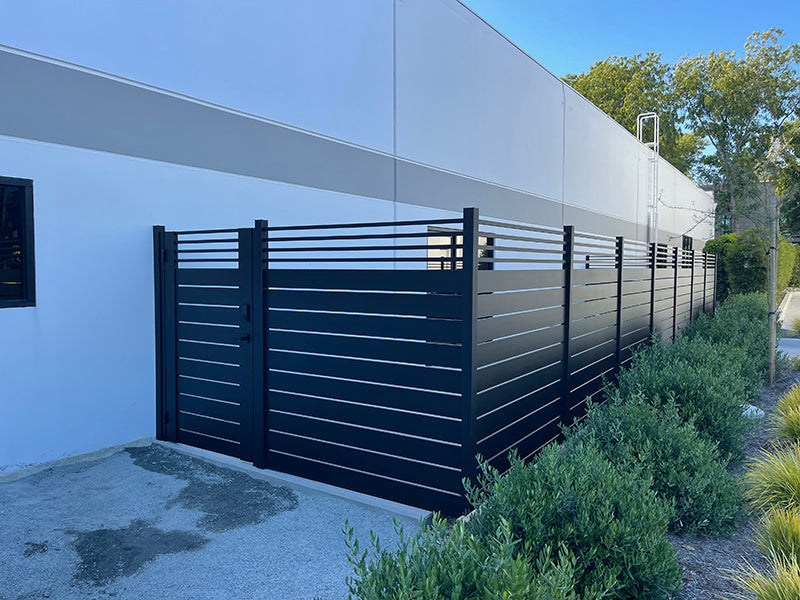
Design flexibility rounds it out. Aluminum runs from clean horizontal slats for modern builds to traditional picket profiles for older homes, and it is light enough to hang as tall panels or wide gates without straining the posts. Owners weighing this route usually start with powder-coated aluminum fencing and choose a profile that answers the home's architecture.
The honest limits are privacy and top-end strength. Slatted aluminum gives partial screening rather than full privacy, and while it is plenty strong for a residential perimeter, a property that needs a true security barrier still leans toward iron.
Glass: Open Views With Real Trade-Offs
Glass fencing exists for one job that nothing else does as well: enclosing a space without visually closing it off. Around a pool or along a view lot, tempered glass panels can meet pool safety barrier guidelines while leaving the sightline completely open.
That transparency is the whole appeal. A backyard that opens to the ocean or a canyon keeps its view intact, and the pool area feels larger because the eye never hits a barrier.
How the glass is mounted shapes both the look and the budget. Frameless panels held by discreet spigots or standoffs give the cleanest, most seamless view, while semi-frameless systems with slim posts cost less and add rigidity on longer runs. The mounting choice is worth making early, since it affects the footing and the final appearance as much as the glass itself.
The trade-offs are upkeep and cost. Glass shows water spots, salt film, and fingerprints, so a coastal installation needs regular cleaning to stay crisp, and tempered glass with quality hardware sits at the higher end of the price range. It also offers no privacy at all, which makes it a specialty choice for the right setting rather than a whole-property fence.
Composite: Wood Warmth Without the Upkeep
Composite is what owners reach for when they want the look of a solid wood fence without the sanding, staining, and rot that come with it. Made from wood fibers bound in polymer, it delivers full privacy and a warm, natural appearance.
Durability is the pitch. Composite resists moisture, insects, and warping far better than natural wood, and it never needs staining or sealing, so a rinse and the occasional wash keep it looking new.
Color choice matters more than most owners expect. Composite comes in a wide range of wood-tone and gray finishes, and lighter shades stay noticeably cooler underfoot and fade less over years of strong sun. Quality boards are engineered with UV stabilizers, so the color you install is close to the color you keep.
Where composite asks for care is heat and cost. Darker boards can absorb a lot of sun in hot inland yards, and the material carries a higher upfront price than wood, though the skipped maintenance narrows that gap over time. For a private backyard that wants warmth rather than metal, it is a strong answer.
Coastal vs Inland: How Location Changes the Answer
Southern California is really several climates, and the distance from the coast shifts the calculus. What thrives on a bluff in Laguna can struggle in the inland heat, and the reverse holds too.
Near the Coast
Salt air is the deciding factor within a few miles of the water. Aluminum's rust resistance makes it the safe default, glass earns its keep on view lots as long as someone will clean it, and any metal component should carry a marine-grade powder-coated finish. Homeowners sorting through home fencing installations near the shore should treat corrosion resistance as the first filter.
Inland and Hotter Zones
Farther inland, intense sun and heat move to the front of the list. Aluminum and composite both perform well, though lighter composite colors stay cooler to the touch, and UV-stable finishes matter more than salt resistance. Fading and heat, not corrosion, are the enemies to design around here.
Matching the Material to the Job
The cleanest way to decide is to lead with the fence's main purpose rather than the material name. Each job points fairly directly at a material.
For a pool or view lot where sightlines are everything, glass is the material built for the task. For a low-maintenance perimeter that resists coastal air and comes in almost any style, aluminum is the reliable pick. For a private backyard that wants the warmth of wood without the chores, composite delivers.
Budget threads through all three. Aluminum sits in the accessible middle, composite runs higher for the privacy and low upkeep, and glass tops the range for its specialty role. The longer view matters too, since a material that skips repainting or restaining can cost less across a decade even when it costs more on day one.
Making the Choice
There is no single winner in a composite, glass, and aluminum comparison, only the right fit for a specific property. Weigh your setting, your appetite for maintenance, the privacy you need, and how close you are to the coast, and one material usually rises to the top.
The surest way to confirm it is to walk the property with someone who installs all three across Southern California. To match the right material to your home, your view, and your budget, request a custom quote and we will help you weigh the options against your site.
FAQ
Which fence material lasts longest in Southern California?
Aluminum tends to last longest with the least effort because it does not rust, which matters most near the coast. Composite also holds up well against moisture and insects and never needs staining. Glass is durable but demands regular cleaning to stay clear. The best long-term pick depends on whether corrosion, heat, or upkeep is your main concern.
Is aluminum or composite fencing better for privacy?
Composite is the stronger privacy choice because it forms a solid panel with no gaps, giving the look of a wood fence without the upkeep. Slatted aluminum offers only partial screening, since light and sightlines pass between the slats. If full privacy is the goal, composite wins; if low maintenance and airflow matter more, aluminum is the better fit.
Does glass fencing work for a pool?
Yes. Tempered glass panels are a popular pool enclosure because they meet safety and code requirements while keeping the view completely open, so the pool area feels larger and unobstructed. The trade-off is cleaning, since glass shows water spots and salt film, especially near the coast. It offers no privacy, which is why it suits pools and view lots specifically.
How does coastal air affect fence material choice?
Salt-laden coastal air corrodes unprotected metal, so aluminum's natural rust resistance makes it the safe default within a few miles of the water. Any metal hardware or framing should carry a marine-grade powder-coated finish. Glass performs well on view lots as long as someone cleans it regularly. Corrosion resistance should be the first filter for a coastal fence.
Which fence material is the most affordable?
Aluminum generally sits in the accessible middle of the range, making it the value pick for most residential perimeters. Composite runs higher because of the privacy and low upkeep it provides, and glass tops the range for its specialty role. Factoring in years of skipped repainting or restaining, aluminum and composite can cost less over a decade than a cheaper material that needs constant care.
