

TL;DR: A gate can be both a genuine security barrier and a design centerpiece; the trick is treating sight lines, materials, lighting, and automation as one connected plan.
Security gate design is the practice of shaping an entry gate so it deters and delays intruders while still reading as a deliberate piece of the home's architecture. The two goals pull in the same direction more often than people expect. A gate that looks considered signals that the whole property is cared for, and a well-built barrier tends to carry the kind of detailing that makes it handsome in the first place.
The idea that you must trade one for the other is the myth this guide takes apart. For Southern California homes across Orange County and Los Angeles County, the strongest gates are usually the best-looking ones on the street.
The Security-Style Trade-Off Is a Myth
The worry sounds reasonable at first: a gate built like a fortress looks like one, and a pretty gate must be flimsy. In practice the opposite holds. The elements that make a gate hard to breach are the same ones that give it presence.
Height and solid construction read as both strength and stateliness. Quality hinges, a heavy frame, and a well-anchored footing are invisible to a passerby but produce the reassuring, planted look of a gate that will not sag or rattle.
Where the trade-off actually lives is in thoughtless design, not in security itself. A gate becomes ugly when it is bolted on as an afterthought, mismatched to the house, or loaded with cheap hardware. Design it as part of the property from the start and security and style stop competing.
Sight Lines: Seeing Out Without Opening Up
Sight lines are where security and aesthetics meet most directly. How much you can see through a gate, and how much a stranger can see in, shapes both the safety and the feel of the entrance.
An open picket or spindle design lets residents and cameras see approaching visitors, keeps the entry from feeling like a bunker, and removes the blind spots where someone could linger unseen. The airy look that buyers love is also the safer one, because visibility is a deterrent in its own right.
Privacy-forward properties can still get there without going solid. Perforated metal panels, tight vertical slats, and layered pickets screen the view at eye level while preserving enough transparency for sight lines and airflow. The design question is not open versus closed but where to place opacity and where to keep the eye moving.
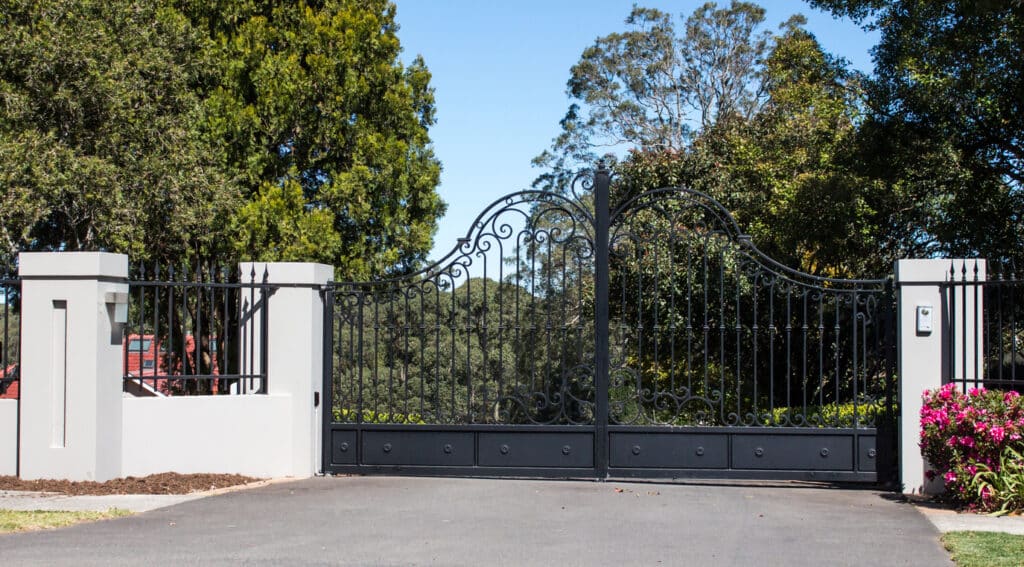
Materials and Detailing That Do Both Jobs
The material sets the tone for the whole gate, and it also sets the security floor. Iron and steel bring mass and rigidity that resist forced entry, which is why they dominate high-end entry gates, and their weight is exactly what lets a design carry ornamental work without looking fussy.
Detailing is where a barrier turns into a statement. Finials, scrollwork, cast rosettes, and a considered top rail give a gate its personality, and several of these details do security work too.
Spear-top finials, for instance, look classic while making the top of the gate genuinely hard to climb. A capped or rolled top rail removes an easy handhold. Tight picket spacing keeps the design crisp and also keeps a person from slipping through or getting a foothold. Owners drawn to that blend of ornament and strength often start with iron gate options and tailor the detailing to the home's era and lines.
Powder coating ties it together by protecting the metal from the coastal air while locking in the color, so the finish that keeps rust off is also the one that makes the gate look intentional for years.
Lighting That Secures and Flatters
Lighting is the most underused tool in gate design, and it pays off twice. Good light at the entry improves safety after dark and turns the gate into a nighttime feature rather than a black silhouette.
From a security standpoint, a well-lit entrance removes the shadows an intruder would rely on and makes cameras far more useful. Motion-activated fixtures add a jolt of attention exactly when something moves near the gate.
The design payoff is just as real. Uplighting a pair of pillars, grazing light across a textured metal panel, or backlighting scrollwork gives the entrance depth and drama that daytime cannot. Warm, shielded fixtures aimed to avoid glare keep the effect flattering instead of harsh, and they respect neighbors and dark-sky sensibilities at the same time.
Designing for Your Southern California Property
A gate has to answer to its specific site, and a few regional realities shape the right design. The coastal climate, the local architecture, and community rules all steer the decision.
Climate and Architecture
Salt-laden coastal air is hard on unprotected metal, so a powder-coated finish and quality hardware are not luxuries near the water; they are what keeps the gate sound. The style should also answer the house, whether that means clean horizontal lines for a modern build in Newport Beach or ornamental ironwork for a Spanish-revival home further inland.
HOA and Access Rules
Many planned communities across Orange County and Los Angeles County set standards for gate height, appearance, and emergency access. Confirming those rules before the design is locked keeps a beautiful gate from becoming a compliance problem, and a good installer asks about them at the first conversation.
Smart Locks and Automation, Built In From the Start
Security and style extend past the gate leaf to how the gate opens and who can open it. Automation and smart access are where a modern gate earns its keep, and designing them in early keeps the hardware from spoiling the look.

A smart lock or keypad lets an owner grant a temporary code to a house cleaner or a delivery and delete it later, which is tighter control than a hidden key ever offered. Video intercoms that ring a phone let you see and speak to a visitor from anywhere, turning the gate into a screening point rather than just a barrier.
The design discipline is to plan the conduit runs, the operator placement, and the keypad or reader location while the gate is still on paper. Hardware that is considered from the start disappears into the design, where hardware added later tends to look bolted on. Pairing the right access-control hardware with the gate is what makes a secure entrance feel effortless to use.
Automation carries a safety obligation alongside the style points. A properly built powered gate follows the ASTM F2200 standard for automated vehicular gate construction, which sets the entrapment-protection requirements that keep a moving gate from harming a person, a pet, or a vehicle.
Battery backup deserves a mention because of local power shutoffs during high wind and fire conditions. A backup keeps the gate cycling through an outage, so security never depends on the grid staying up.
Bringing Security and Style Together
A gate that does both jobs is not a compromise between them; it is a set of aligned choices. Open enough for sight lines, built heavy enough to resist a breach, detailed with finials and a finish that flatter the house, lit to secure and to shine, and automated with hardware planned from the start.
The way to reach that is a conversation about the property, the architecture, and how you want the entrance to work. To design a gate that reads as both a barrier and a centerpiece for your Southern California home, schedule a consultation and we will match the materials, detailing, lighting, and automation to your property.
FAQ
Does a more secure gate have to look industrial?
No. The features that make a gate secure, such as a heavy frame, tight picket spacing, and spear-top finials, are also the ones that give it presence and character. Industrial-looking gates are usually the result of thoughtless design or cheap hardware, not of security itself. A well-designed gate reads as both strong and handsome.
Are open or solid gates better for security?
Open designs are often safer because they let residents and cameras see who is approaching and remove the blind spots a solid gate creates. Where privacy matters, perforated panels or tight slats screen the view at eye level while keeping enough visibility for sight lines. The goal is placing opacity deliberately rather than choosing fully open or fully closed.
How does lighting improve gate security?
Good entry lighting removes the shadows an intruder would use and makes security cameras far more effective after dark. Motion-activated fixtures draw attention the moment something moves near the gate. The same light also gives the entrance depth and drama at night, so lighting improves safety and appearance at once.
Can I add smart locks and automation to a custom gate?
Yes, and the best results come from designing them in from the start. Planning the operator placement, conduit runs, and keypad or reader location while the gate is still on paper keeps the hardware from looking bolted on later. Smart access also lets you issue and revoke temporary codes and see visitors from your phone.
What should I consider for a gate near the coast?
Salt air is hard on unprotected metal, so a powder-coated finish and quality hardware are essential to keep a coastal gate sound. The design should also match the home's architecture and satisfy any HOA rules on height and appearance. Battery backup is worth adding so the gate still opens during a power shutoff.
