

TL;DR: Restoring a wrought iron fence pays off when the frame and posts are sound and only the finish and a few pickets have failed; replacement wins once corrosion reaches the footings or spreads across most of the run.
Wrought iron fence restoration is the process of bringing an aging iron fence back to structural and visual health through rust treatment, sectional repair, and refinishing, rather than tearing it out and starting over. For a lot of Southern California properties, the decision comes down to how deep the corrosion runs and how much of the fence is affected. A fence with a solid frame, sound posts, and surface rust is almost always worth saving. A fence with rusted-through footings, failed welds across multiple sections, and pickets that flake apart when you press on them has usually passed the point where repair makes economic sense. This guide walks through what fails, how restoration actually works, and where the line sits between a smart repair and money better spent on replacement.
What Actually Fails on a Wrought Iron Fence
Iron fences rarely fail all at once. They degrade in a predictable order, and knowing that order helps an owner judge where their fence sits on the timeline.
Surface rust shows up first. It starts at horizontal surfaces that hold water, at joints where the finish cracked, and at the base of pickets where they meet the ground or a concrete mow strip. Surface rust looks alarming but is often cosmetic, and catching it here is the cheapest possible intervention.
The finish fails next. Old paint chalks, cracks, and peels, which exposes bare metal to moisture and accelerates the next round of corrosion. Once the protective coating is gone, rust moves from surface staining into the metal itself.
Structural corrosion is the serious stage. When rust penetrates deep into a picket, a rail, or a post, the metal loses cross-section and strength. Posts are the highest-stakes failure point because they carry the whole fence. A post that has rusted through at the concrete line can let an entire section lean or drop, and that is the kind of damage that pushes a project from repair toward replacement.
Joint and weld failure rounds out the list. Older wrought iron was often assembled with collars, rivets, and forge welds that loosen over decades of thermal expansion and vibration. Modern repairs re-weld or re-secure these joints, but a fence with widespread joint failure is telling you the assembly itself is tired.
The Restoration Path, Step by Step
A proper restoration follows a clear sequence. Skipping steps, especially the prep work, is why cheap repaint jobs fail within a year or two.
Rust Assessment and Treatment
Every restoration starts with an honest assessment of how far the rust has gone. A technician sounds the metal, checks the posts at the ground line, and looks for the difference between surface staining and section loss. That distinction drives everything that follows, since surface rust responds to a straightforward rust removal and metal-prep sequence of stripping the loose corrosion, neutralizing what remains with a converter, and priming the bare metal, while section loss calls for cutting out and welding in new material.
Treatment depends on severity. Light surface rust gets mechanically removed by wire brushing, sanding, or media blasting, then treated with a rust-inhibiting primer. Moderate rust may call for a chemical converter that stabilizes the corrosion before priming. Deep rust with section loss cannot be treated cosmetically; that metal has to be cut out and replaced.
Sectional Repair and Replacement
One of the real advantages of iron is that it repairs in sections. A fabricator can cut out a corroded picket, a damaged rail, or even a failed post and weld in new material that matches the original profile. This is what makes restoration economical: you replace the ten percent that failed instead of the ninety percent that is still sound.
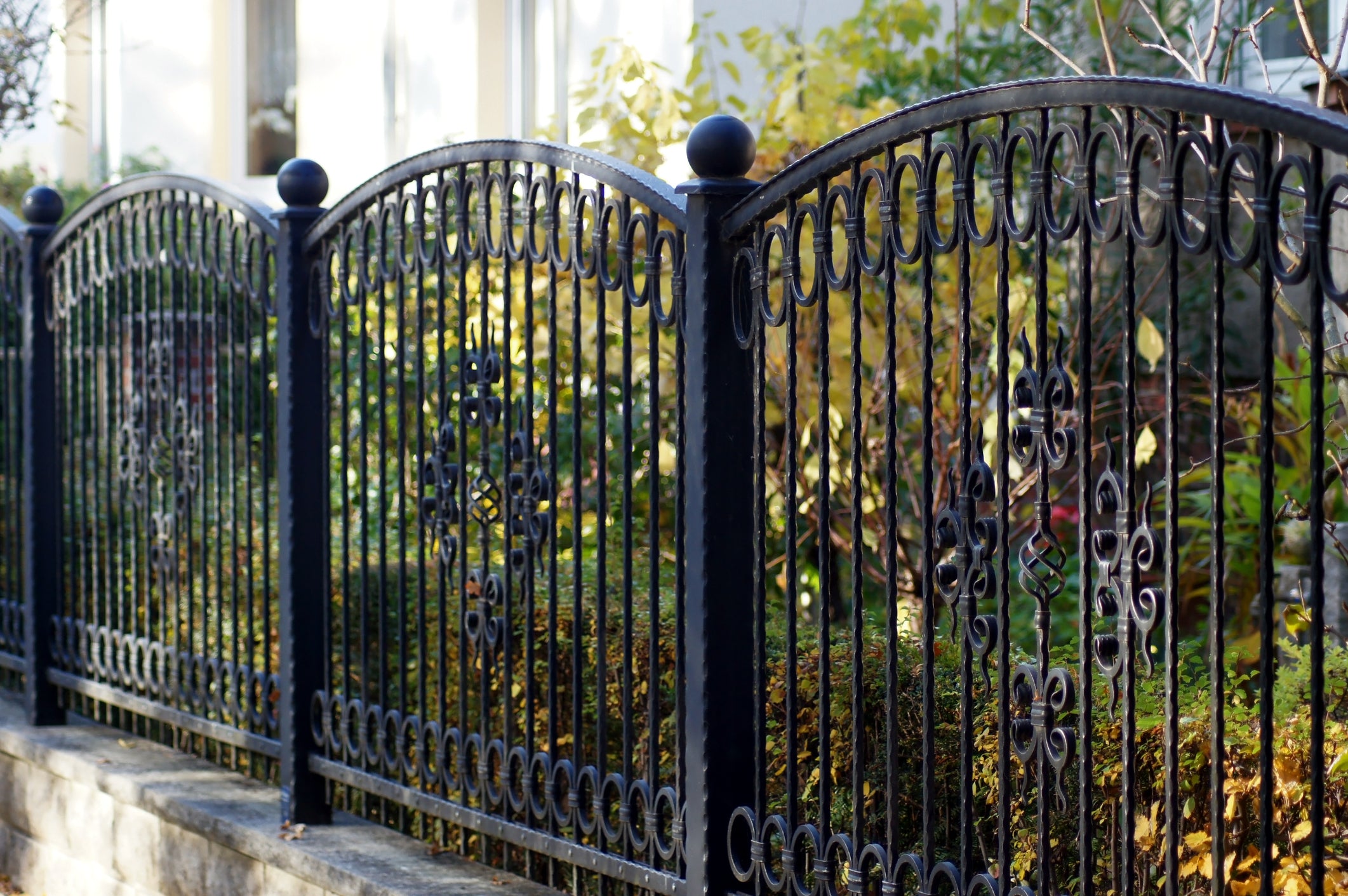
Matching matters here. A skilled shop can reproduce older picket profiles, scroll patterns, and finial styles so the repaired section blends with the original. Iron Master keeps a range of wrought iron fence designs and stock profiles that cover most of the common patterns found on Orange County and Los Angeles County properties, which keeps sectional repairs looking seamless rather than patched.
Refinishing: Paint vs Powder Coating
Refinishing is where owners face a real choice. Field-applied paint is the traditional route and the only practical option when a fence is being restored in place. A good multi-coat system with a rust-inhibiting primer and a quality topcoat holds up reasonably well, and it lets a crew touch up sections without dismantling the fence.
Powder coating is the more durable finish, but it requires removing the section, blasting it to bare metal, and baking the coating in a shop oven. That means the fence has to come apart. When sections are already being pulled for sectional repair, powder coating those pieces makes sense. For a fence staying fully in place, a professional-grade painted finish is the realistic call. The same finishing decisions come up on matching gates and railings, so owners restoring an iron fence often refresh their custom railings and cladding at the same time to keep the whole property consistent.
When Repair Is the Smart Money
Restoration is the right economic move when the bones of the fence are sound. A few conditions point clearly toward repair.
- The posts are solid. If the posts pass inspection at the ground line and hold plumb, the most expensive part of any fence is already in good shape.
- The corrosion is surface-level or localized. Rust confined to the finish and a handful of pickets is straightforward to treat and repair.
- The design is worth keeping. Older custom ironwork often has scrollwork, finials, and proportions that are expensive to reproduce from scratch. Preserving that character has real value.
- The fence has sentimental or architectural fit. On period homes and established neighborhoods, a restored original often suits the property better than anything new.
In these cases, restoration typically runs a fraction of replacement cost and extends the fence's life by decades when the refinishing is done properly. The savings are real, and the result keeps the character that made the fence worth saving.
When Replacement Wins on Economics
There is a point where pouring money into an old fence stops making sense, and a clear-eyed contractor will tell you when you have reached it.
Widespread post failure is the biggest tell. When posts have rusted through at the footings across much of the run, you are effectively rebuilding the fence anyway, and doing it piecemeal costs more than a clean replacement. The same is true when structural corrosion has spread through the majority of rails and pickets rather than staying localized.
Repeated past repairs are another signal. A fence that has already been patched several times, especially with mismatched materials or quick cosmetic fixes, often hides accumulated damage that keeps resurfacing. At some stage the ongoing repair spend crosses the cost of a new fence built to last.
Code and safety upgrades can also tip the math. If the fence needs to meet current pool-barrier height and spacing rules, or if an owner wants to add automation and access control that an old fence was never designed to carry, replacement lets those requirements get built in from the start rather than bolted onto tired iron.
Coastal vs Inland: How Location Changes the Math
Where a fence sits in Southern California changes the corrosion timeline, and that shifts the repair-versus-replace calculation.
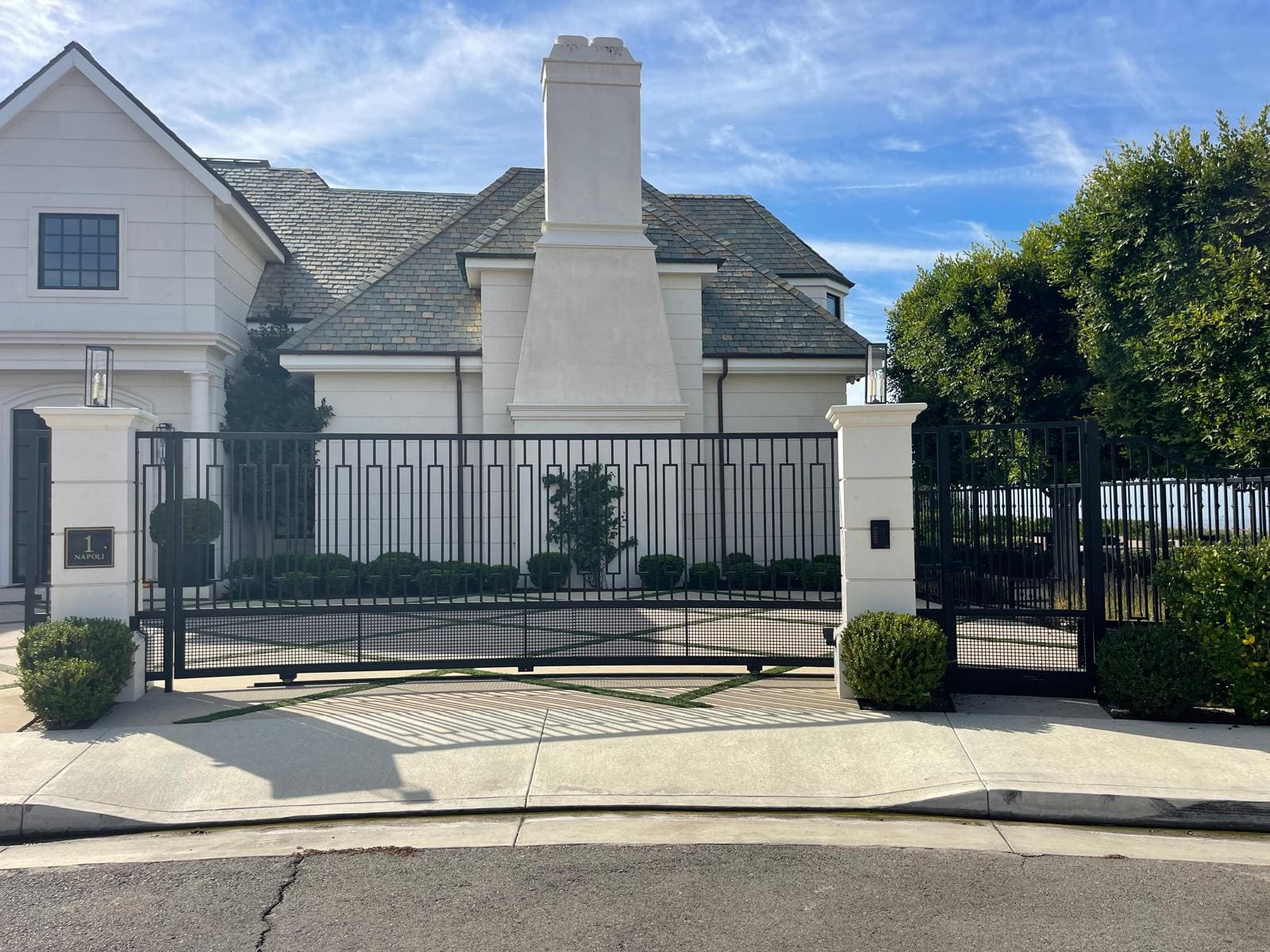
Coastal properties in cities like Newport Beach, Huntington Beach, and the Palos Verdes area face daily salt air that drives corrosion faster than inland conditions. On the coast, restoration is still worthwhile, but the refinishing has to be first-rate, and owners should expect shorter intervals between maintenance touch-ups. Salt air is unforgiving toward any gap in the protective coating.
Inland properties in areas like Costa Mesa, Anaheim, and the Inland Empire deal with less salt but more thermal cycling and dry-then-wet seasonal swings. Corrosion moves slower here, which means an inland iron fence is more often a good restoration candidate, and a quality refinish tends to last longer between services.
Neither location makes the decision for you, but both change the inputs. A coastal fence with early surface rust is worth restoring now, before the salt air turns a cosmetic problem into a structural one. An inland fence often has more runway, which gives owners room to plan the work around budget and season.
Getting an Honest Assessment
The restore-or-replace question is hard to answer from a photo, because the deciding factor is usually the condition of the posts at the ground line, which you cannot judge from the top. A proper assessment checks the footings, sounds the metal for section loss, and looks at the fence as a system rather than a set of pretty or ugly pickets.
A trustworthy contractor will walk the fence, show you where the real problems are, and give you the honest version even when that means a smaller repair invoice instead of a full replacement. To get a clear read on whether your iron fence is a restoration candidate or a replacement case, request a custom quote and a technician will assess the posts, the finish, and the sections that need attention.
FAQ
Is it cheaper to restore or replace a wrought iron fence?
Restoration is usually cheaper when the posts and frame are sound and only the finish and a few pickets have failed, often running a fraction of replacement cost. Replacement becomes the better value once corrosion reaches the footings or spreads across most of the run, because piecemeal repairs on a failing fence add up past the cost of a new one.
How long does a restored wrought iron fence last?
A properly restored iron fence with sound posts and a quality refinish can last several decades. The finish is the wear item. Inland Southern California fences hold their finish longer, while coastal properties exposed to salt air need more frequent touch-ups to keep corrosion from restarting under any gap in the coating.
Can rusted wrought iron be repaired, or does it need replacing?
Surface and moderate rust can be repaired by removing the corrosion, treating the bare metal, and refinishing. Deep rust that has eaten through the cross-section of a picket, rail, or post cannot be treated cosmetically; that section has to be cut out and welded with new material. Whether the fence overall is repairable depends on how widespread the deep corrosion is.
Should I paint or powder coat during restoration?
Powder coating is more durable but requires removing sections to blast and bake them in a shop, so it fits when pieces are already coming off for repair. A professional-grade painted system is the practical choice for a fence being restored in place, since it can be applied and touched up without dismantling the whole run.
How do I know if my fence posts are still good?
Check the posts where they meet the concrete or soil, since that is where they rust first and where you cannot see damage from the top. Sound posts hold plumb and ring solid when tapped. Posts that flex, lean, or sound hollow at the base often have section loss, and widespread post failure is the clearest signal that replacement beats repair.
